Lawn Disease Treatment Challenges
Client’s Concern
Lawn disease treatment is often top of mind during the summer. Recently, one of our dedicated clients emailed us with concerns about how the grass in his backyard was turning brown. Naturally, he suspected either grubs might be to blame, or it was due to being the sunniest part of the lawn. “The dead spot I’m concerned about is interesting because it’s in the sunniest part of the backyard and traditionally has been the greenest area of the yard,” he shared.
Our customer care team requested to send photos of the areas in question. The client quickly replied with excellent photos for us to observe, and boy, that lawn was D-R-Y. We quickly set up an assessment. Our lawn care technician, Yobanis Flores, immediately noticed signs of moss, a little heat stress, and possible dog urine damage. Although he didn’t find grub damage, he discovered something more sinister—lawn disease. With his keen eye and expertise, Yobanis identified the culprit as Brown Patch disease, a common issue in Northern Virginia. However, he wanted to evaluate the issue further, sending photos to our lawn specialist, Mark Tavares, for confirmation.
Identifying Lawn Issues for Lawn Disease Treatment
When evaluating a lawn problem like this, we consider factors like heat stress, foot traffic, dog urine, sun and shade conditions, erosion, soil deficiencies, and fungus/disease. Some lawn diseases are immediately noticeable, such as dollar spot and fairy ring. Sometimes diseases like brown patch can be confused with heat stress, especially if the fungus has been around for a while.
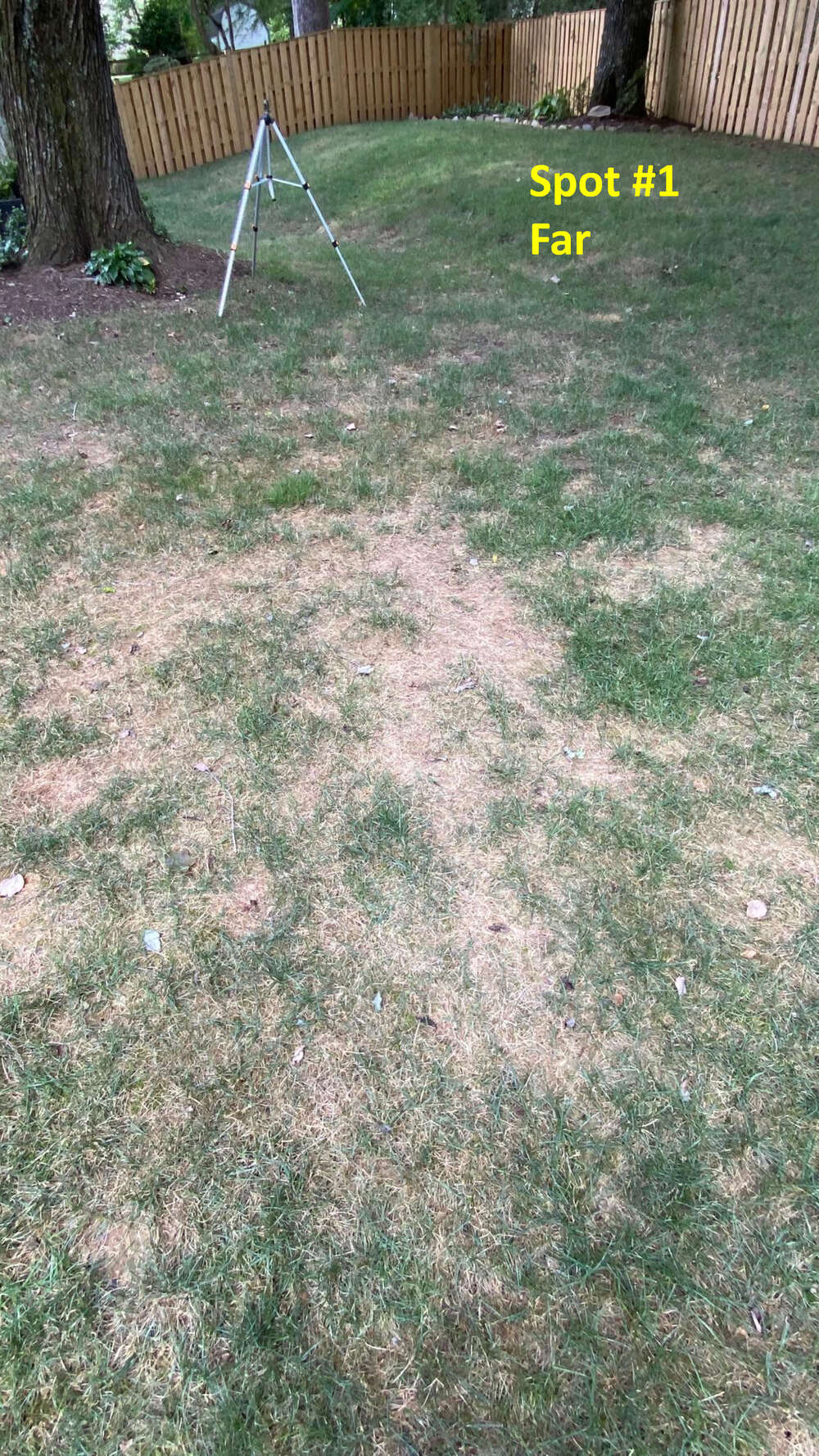
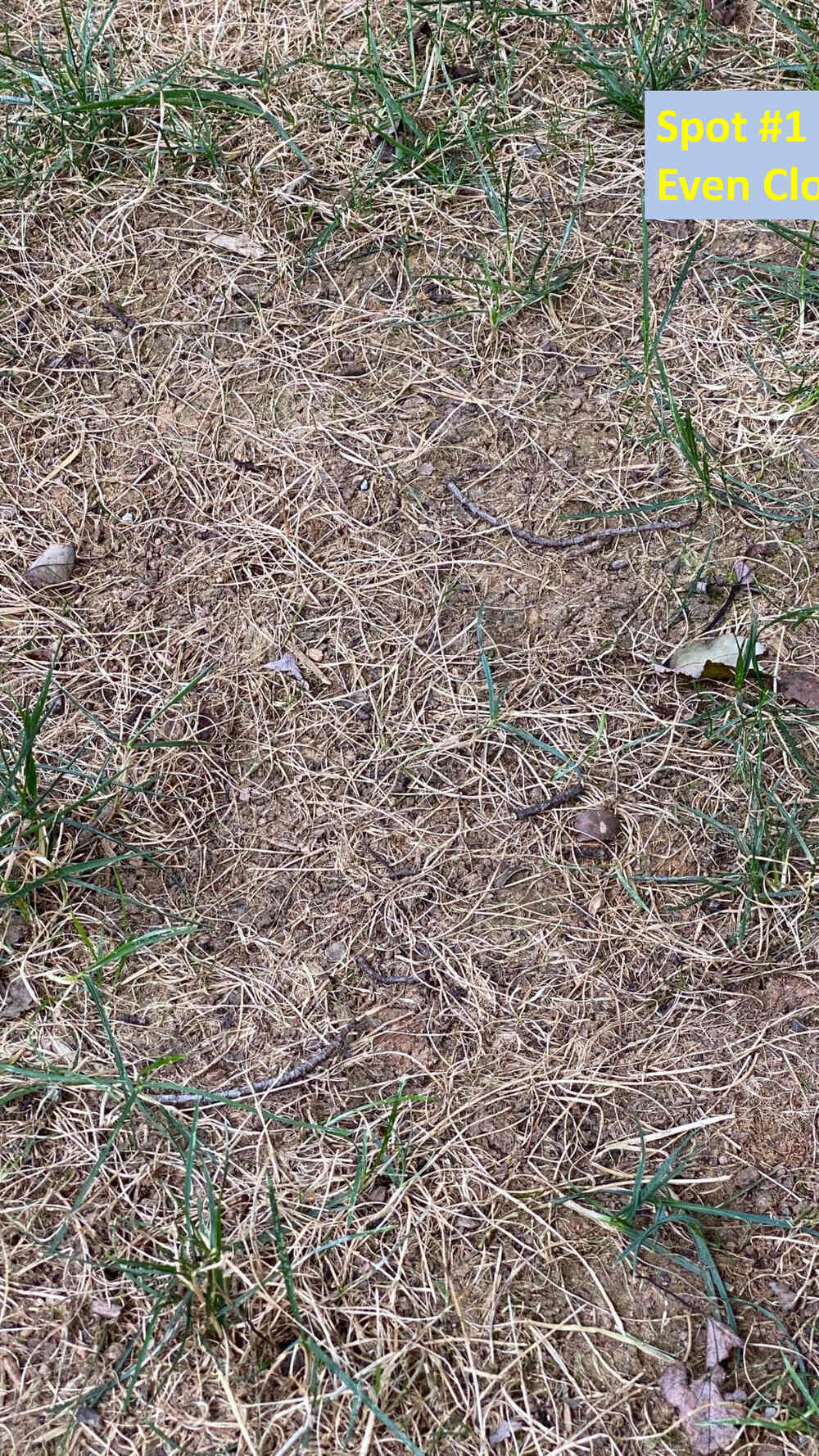
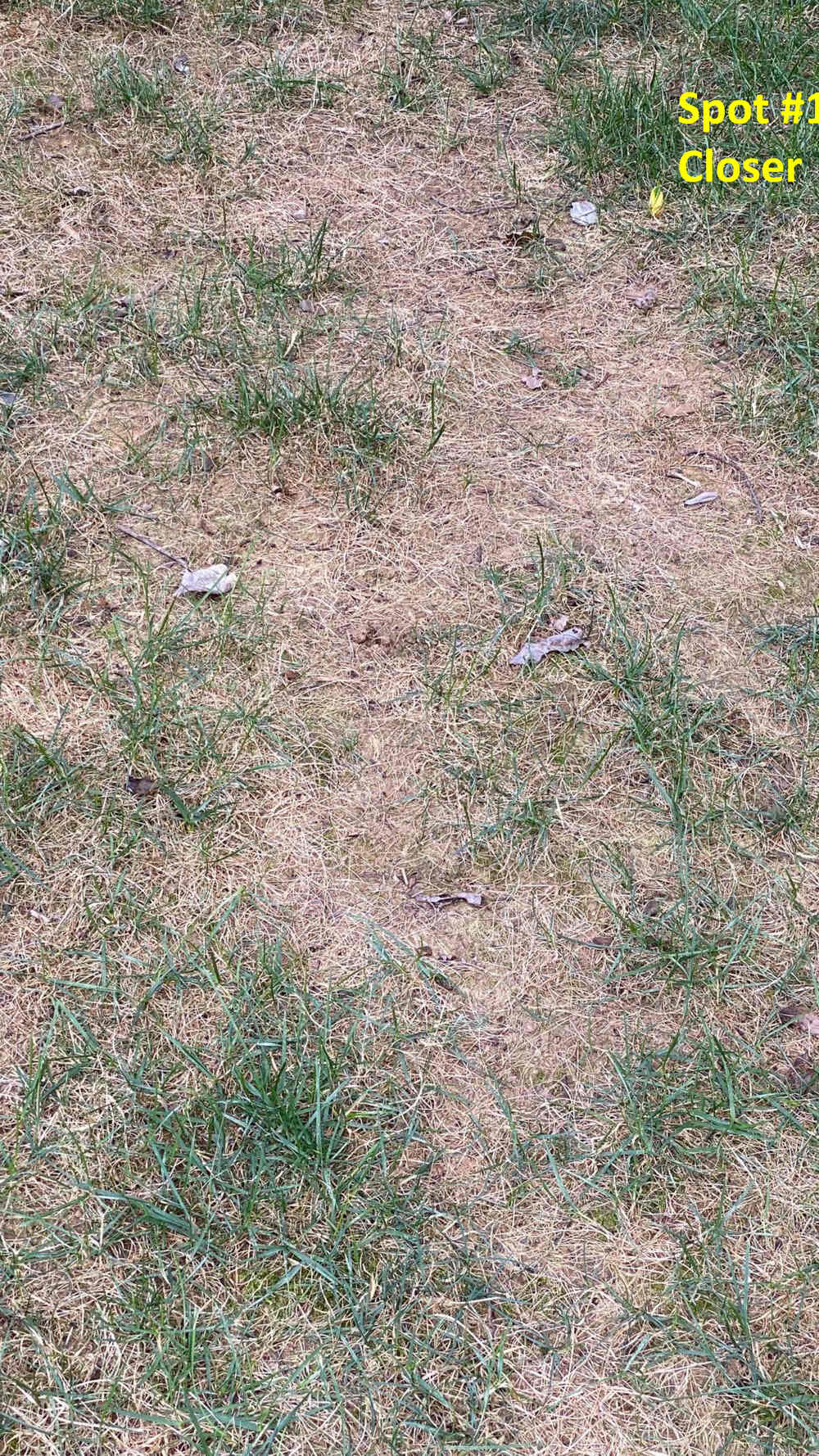
In these photos, we see dry, brown grass and bare spots surrounded by greener grass, showing the stark contrast. The next shows a closer view of the dry grass, highlighting the extent of the damage. Upon closer inspection, you can see how damaged the blades are. The bare spots near the fence might have been from traffic, heat stress, or dog urine, but the distinctive U shape ruled out those possibilities. A closer view of the “dog urine” spot confirms the presence of a latent Brown Patch disease.

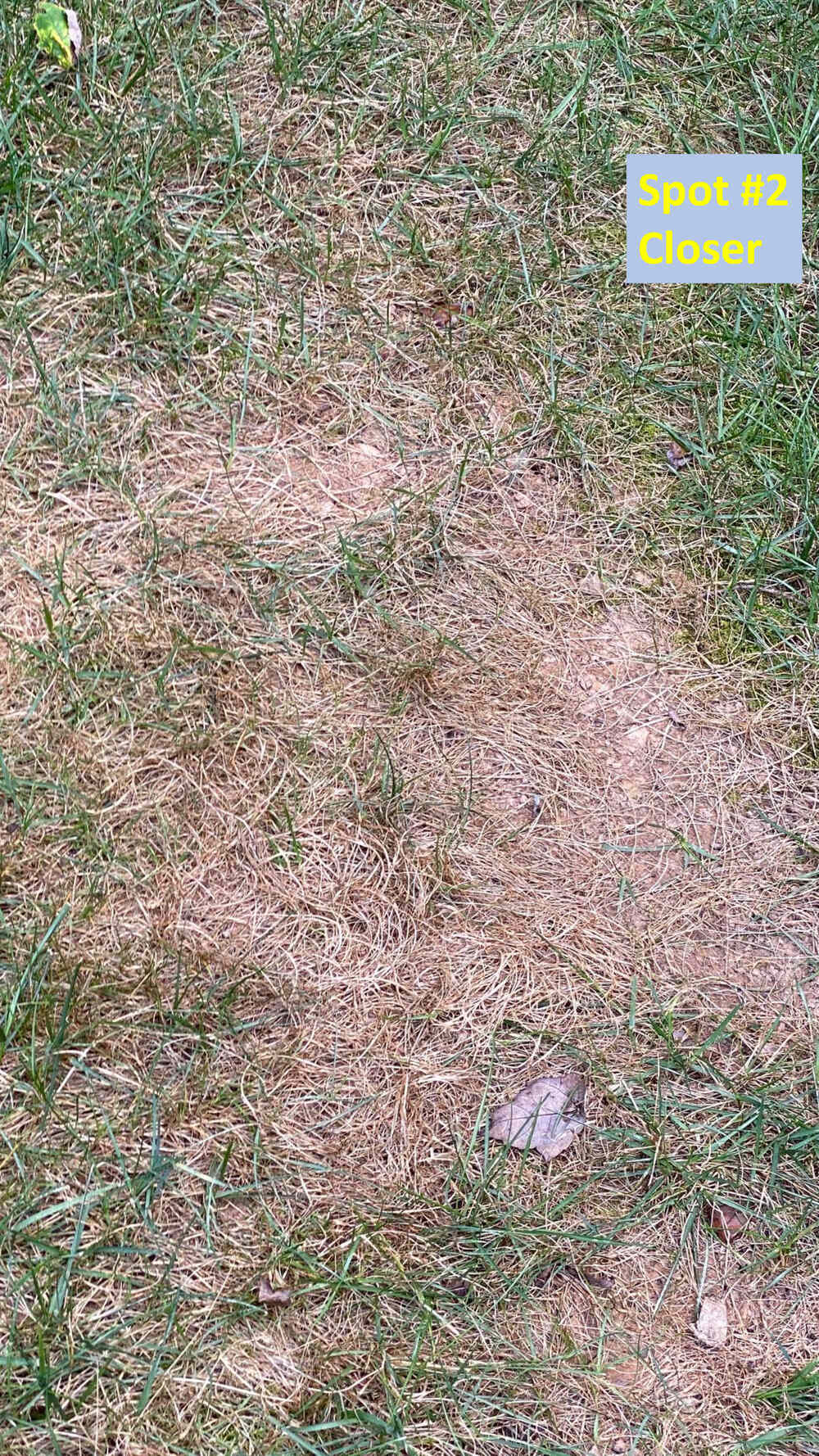
Heat stress usually shows as uniform browning with a bluish, hazy color. If you run your hand across the grass and it comes up easily, it’s often a sign of disease activity rather than regular stress. If it were dog-related, you’d see complete circular spots, not the distinct U shape we found here. This is a common sight in summer, especially with extra rain and wet days that create the perfect environment for diseases.
Our Diagnosis
After a thorough evaluation, we determined that the main issue was—you guessed it—Brown Patch disease, exacerbated by the recent rains and resulting water stagnation, particularly at night. This diagnosis was backed by our expert, Mark Tavares, who confirmed the findings with remarkable accuracy. On to the lawn disease treatment!
How to Fix It: Lawn Fungus Apps and Aeration!
To tackle Brown Patch, we recommend our Summer Fungus Control program. This consists of three rounds of treatment, starting in early June. Our products stay active in the soil for 28-30 days, ensuring continuous protection. Regular treatments help manage the issue, and by September, the problem should naturally subside as the weather cools.
Keep traffic off the affected areas to prevent further damage and allow the treatments to work their magic.
After Care
We gave our clients detailed watering instructions and emphasized that consistent watering is key to making sure the new grass seeds germinate and thrive. Proper after-care involves nurturing the lawn with regular watering, especially during dry spells. Our client is on board with aerating and seeding again this fall to continue the lawn restoration process. Sometimes extensive lawn fungus damage can require multiple seasons to achieve optimal health, particularly when paired with our organic-based lawn care program.
The Role of Fall Aeration and Seeding
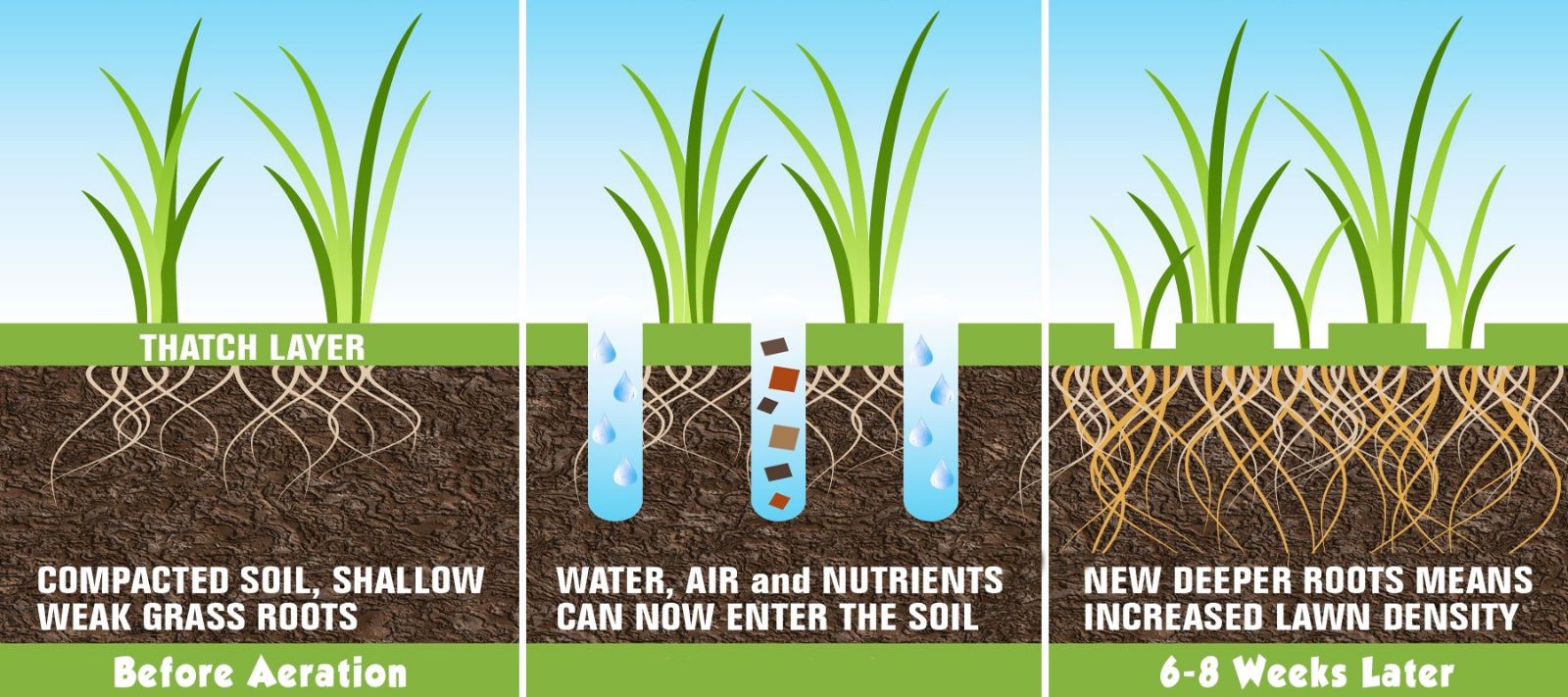
Fall aeration and seeding play a crucial role in rejuvenating your lawn. Aeration breaks up compacted soil, allowing air, water, and nutrients to reach the roots. This process also helps reduce thatch buildup, improving the overall health of your lawn. Our MowCow Special Seed Blend is specifically designed to thrive in Northern Virginia’s unique climate and soil conditions, ensuring a lush, resilient lawn.

By filling in those bare spots and strengthening your lawn with new growth, you can outcompete weeds and build a stronger defense against diseases like Brown Patch. Fall Aeration and Seeding is the best way to ensure a thriving, green lawn that’s ready to impress all season long.