Spring Seeding: Is It Right for Your Lawn?
Hey folks! As we swing into spring, you might be eyeing those bare patches on your lawn and thinking about seeding. It’s a common thought this time of year, but let’s dig into why spring isn’t THE best time for planting new seeds.
Problem: The Lure of Spring Seeding
It’s tempting to start spring with a burst of lawn care enthusiasm. However, spring seeding has its pitfalls, particularly here in our dynamic Northern Virginia climate — we do not recommend spring seeding.
While spring offers a fresh start, it’s not the ideal season for seeds to flourish. Our experience shows that seeds germinating in spring struggle to establish deep roots before the heat kicks in. This often leads to a disappointing survival rate as the hot summer progresses. We’re talking a 50% – 80% loss of new grass. Not good!
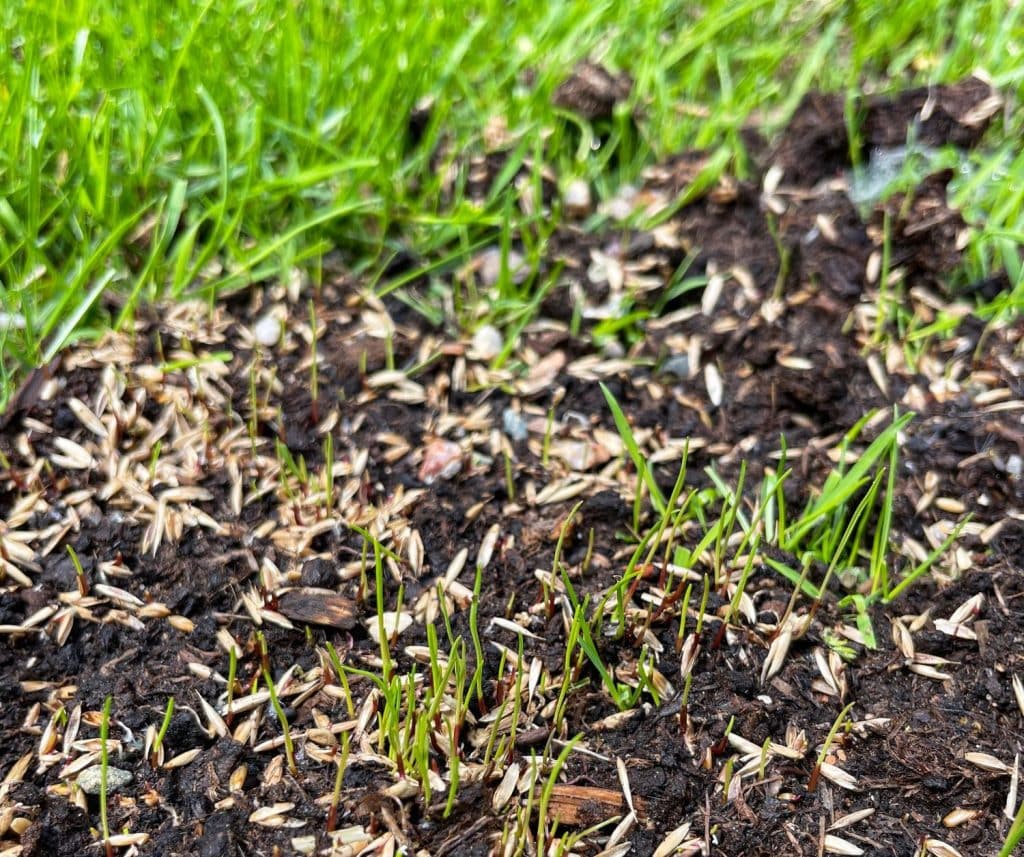
Why Are There Bare Spots?
- Weeds from Last Year: They died off, leaving gaps.
- Leaf Cover: Fall and winter leaves can smother grass below.
- Pet Damage: Spots from your furry friend’s urine.
- Foot Traffic: High-traffic areas endure more wear and tear.
- Lawn Disease: Can kill patches of grass.
- Shade: Trees overhead limit sunlight, affecting growth.
- Soil Conditions: Poor soil can hinder grass development. A soil test can reveal what’s missing!
What You Should Do: No Spring Seeding — Fall Forward
Now, spring seeding can provide a temporary fix, perfect for events or if you’re selling the old homestead. It gives your yard a green boost for those important photos but remember, this lushness won’t last through summer’s heat. By August, you’ll see your efforts fade. Again, ideal for small, quick fixes, it keeps things looking neat for only a while.
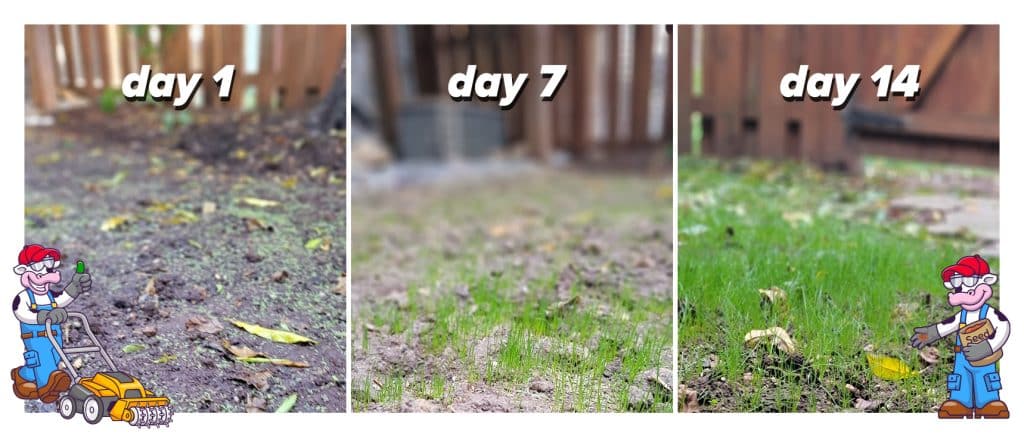
To truly get the best out of your seeding efforts, aim for the fall. This gives your new grass the best start, allowing roots to develop deeply throughout the cooler months. This way, when summer rolls around next year, your lawn is better established to handle its first heat and stay lush and green.
Think Long-Term
Quick fixes might seem appealing, but your lawn will thank you for thinking ahead. Fall seeding improves the odds of survival for new grass while enhancing your lawn’s overall health and appearance for seasons to come.
Practical Tip: Check the Soil
Before you seed, whether in spring or fall, getting a soil test can be a game changer. It helps tailor your lawn care strategy to meet the specific needs of your yard, ensuring that any new grass has the nutrients it needs to thrive.
Happy (fall) seeding!